
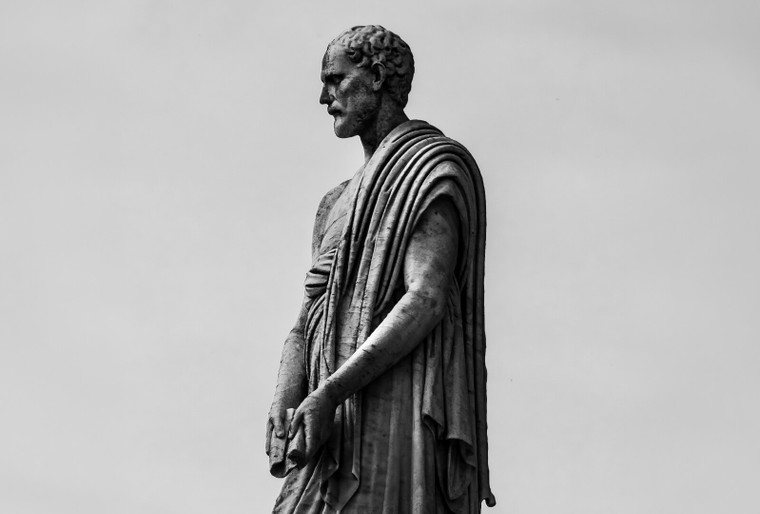
Christianity and Stoicism for the Warrior Poet
Posted by Warrior Poet Society on Mar 5th 2026
A lot of you are drawn to Stoicism for the same reason you’re drawn to training: it’s clean, it’s simple, it’s hard, and it produces attributes that have been celebrated for thousands of years by both warriors and poets. It first drew me in for the exact same reasons.
Stoicism celebrates calm under pressure, discipline in chaos, and a sharpened mind that doesn’t shatter the first time life gets hard.
That’s why Stoicism keeps showing up in our Warrior Poet community. And it’s also why a lot of Christians quietly wrestle with a question they don’t always say out loud:
Can I take what’s good in Stoicism without inheriting what’s broken?
Yes. And I’d argue Christianity doesn’t just allow the best of Stoicism. It actually replaces it completely.
Where Stoicism and Christianity Overlap
Stoicism is built around virtue and self-mastery. The classic Stoic virtues are wisdom, justice, courage, and temperance (self-control).
If you’re trying to become a protector who can think clearly, move decisively, and not fall apart when the pressure spikes, you can see why that appeals.
There’s also the Stoic “dichotomy of control” idea: some things are in your control, some things aren’t, and you waste your life trying to control what you can’t. Epictetus opens the Enchiridion with that exact framework.
Now look at true Christianity in practice. It also demands courage, self-control, steadiness, and a commitment to doing what’s right even when it costs you. Paul’s “fruit of the Spirit” list includes gentleness and self-control, but also love, joy, peace, patience, kindness, goodness, and faithfulness.
That overlap matters because the warrior poet isn’t a rage machine. He’s not a liability with a gym habit and gun debt. He’s strength under authority, loving and peace-seeking, but he is also courageous and sacrificial, ready to make the hard decisions for the preservations of others.
The Key Difference: Stoic Self-Sufficiency vs Christian Dependence on God
I think you can already start to see where the road splits, but let’s get into it.
A common Stoic impulse is self-sufficiency: if you’re wise and disciplined enough, you can become internally unshakable regardless of what happens outside you. It’s a powerful aspiration, but it readily drifts into a kind of closed-loop spirituality where the “highest good” becomes me mastering me.
Christianity starts somewhere else: you are not saved, healed, or made whole by your own competence. You’re saved by grace through faith, not by works, so that no one can boast.
That’s an entirely different foundation.
Stoicism can build an impressive man, but it can also quietly feed pride. Christianity builds a humble man who can still handle anything, because his confidence isn’t rooted in his own performance.
Emotions: “Apatheia” and the Danger of Misreading the Goal
Stoicism is often misunderstood as emotional numbness. In fairness, the Stoic concept of apatheia is closer to freedom from destructive passions than being “dead inside.”
But there’s still a tension here. Stoic emotional therapy can aim at an “undisturbed” inner state, and historically it’s been interpreted at times as the extermination of emotions.
Christianity doesn’t ask you to become numb. It asks you to become ordered and selfless.
Christianity gives you a place for grief, righteous anger, compassion, joy, and love without letting those emotions drive the vehicle.
For the warrior poet, that’s everything. Because love is what keeps your strength from becoming cruelty, and compassion is what prevents competence from turning into domination.
Suffering: Stoic Endurance vs Christian Hope
Both Stoicism and Christianity produce resilience, but they explain suffering differently.
Stoicism trains endurance by narrowing your focus to what is yours to command: your judgments, your choices, your will.
Christianity also trains endurance, but it adds something Stoicism struggles to supply at full strength: concrete hope. Romans says suffering produces perseverance, character, and hope, and that hope is tied to God’s love poured into your life.
Stoicism can help you endure pain without flinching. Christianity can help you endure pain without becoming cold.
Why Christianity Can Give You the Benefits Without the Negatives
Christianity gives you:
• Discipline and self-control, but not as mere self-will (it’s fruit, produced over time).
• Courage and steadiness, but anchored in something bigger than personal grit.
• A framework for suffering that builds endurance, but also refuses despair.
• Humility that kills pride at the root: salvation is a gift, so boasting dies early.
Stoicism can drift toward: “If I’m strong enough, I achieve security and provision.” Christianity says: “Even if I don’t have security or provision, I can still be faithful.”
That is Warrior-Poet ground.
Strength with meaning. Calm with conscience. Violence restrained by love and aimed at protection, not ego.
A Practical Challenge for the Warrior Poet
If you love Stoicism, don’t just read it. Test it, like I did.
Ask yourself where it’s making you better—and where it’s quietly training you to shut down, isolate, or pretend you’re sufficient unto yourself.
Then bring that entire question under the authority of Christ, and let your toughness become something cleaner: not hardness, but holiness, not detachment, but devotion, not pride, but purpose.
Remember, Train Hard. Train Smart. And build a mindset that can endure suffering without surrendering love.