
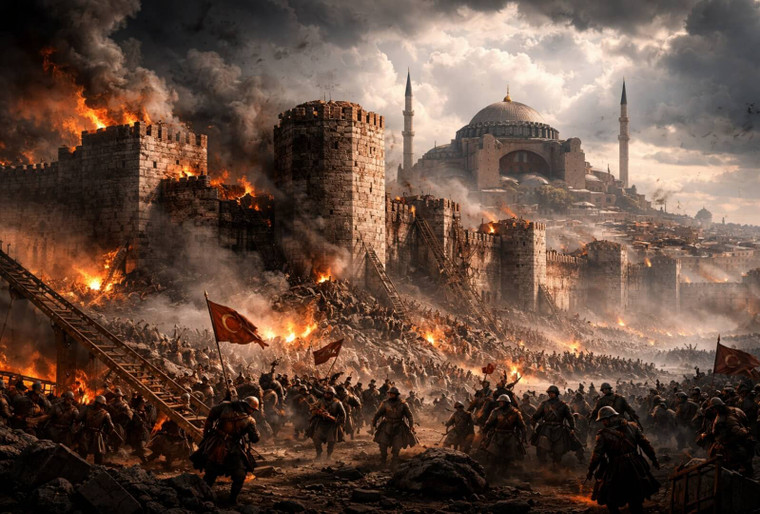
Constantine XI Palaiologos—The Last Stand of a Warrior Poet
Posted by Warrior Poet Society on Feb 6th 2026
Some leaders are remembered for the empires they build, like Caesar Augustus, Queen Victoria, and Thomas Jefferson.
Others are remembered for the worlds they conquered, like Alexander the Great, Genghis Khan, and Cyrus the Great.
But the rarest of all—the true Warrior Poets—are remembered for how they chose to die.
This is why Constantine XI Palaiologos, the final emperor of Byzantium, belongs among the highest ranks of Warrior Poet Profiles.
For those new to this series, a warrior poet is not merely a fighter or a thinker. He is a man whose mind is disciplined by study, whose heart is bound to duty, and whose hands accept violence only when it is required to defend others. He is willing to pay the full cost of leadership—even when the bill comes due in blood.
Constantine XI did not inherit greatness. He inherited a dying world, and he chose to stand for his people until the end.
An Emperor Without Illusions
By the time Constantine XI ascended the throne in 1449, the Byzantine Empire was already a shadow of its former self. Once the greatest Christian empire on earth, it had been reduced to Constantinople itself—a lonely, besieged city surrounded by an expanding Ottoman power.
Constantine knew the truth that many rulers refuse to face: There would be no rescue. No great Western army would arrive. No miracle fleet would break the siege though they tried for this.
And yet, he did not flee.
He could have escaped. He was urged to by close friends and commanders, but he refused.
A warrior poet does not abandon his post simply because the odds have turned against him. He willingly makes the sacrificial play to save those for whom he cares deeply.
The Walls of Constantinople
In 1453, Mehmed II brought an army estimated at over 80,000 men, massive siege cannons, and naval forces capable of sealing the Bosporus. Constantine XI commanded barely 7,000 defenders—Greeks, Genoese, and a handful of volunteers—standing atop walls that had defended Christendom for over a thousand years.
Constantine did not command from a palace during the siege. He walked the walls. He inspected defenses. He spoke with soldiers by name. He prayed with monks. He fought where the danger was greatest. This was not ceremony. This was conviction.
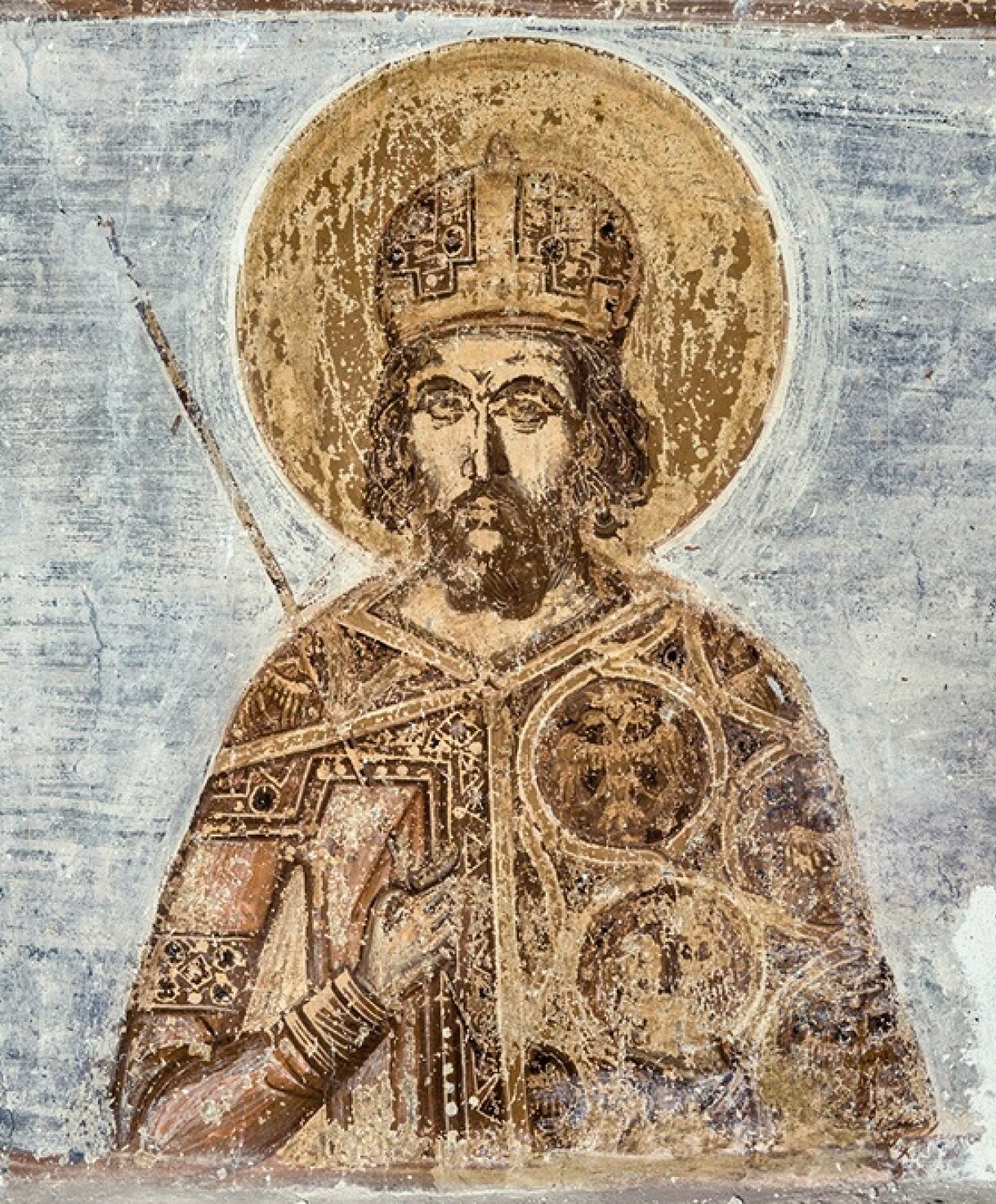
The Final Night
On the evening of May 28, 1453, Constantine XI addressed his people in what has come to be known as The Funeral Oration of the Roman Empire. He implored his soldiers to fight well, with courage and honor for the defense of Christendom, promising to fight beside them.
Afterwards, he received communion with his people and returned to the walls.
Death as a Deliberate Choice
At dawn on May 29, the Ottomans breached the defenses. The city was lost.
At that moment, Historian Nicola Sagundino says that Constantine XI cast off his imperial regalia that marked him as emperor—so as to become indistinguishable from the common soldier—drew his sword and charged into the fray alongside his men where the fighting was thickest, refusing to be captured.
Vanishing into the melee, Constantine XI died as a soldier, shoulder to shoulder with those he led. This is the highest form of leadership.
Why Constantine XI Is the Ideal Warrior Poet
Constantine XI was not remembered for victory—but for faithfulness.
He possessed:
• A clear mind, understanding reality without illusion.
• A loyal heart, bound to his people and faith.
• Skilled hands, willing to fight when all else failed.
• And a sacrificial spirit, choosing death over the way the enemy might leverage his capture.
He teaches us that a warrior poet does not always win—but he never abandons. He shows us that honor is not measured by outcomes, but by choices made when defeat is certain, and he reminds us that though civilizations fall, courage and sacrifice do not.
Remember, Train Hard. Train Smart. And live to the highest standard of duty, faith, and sacrifice.