

The Battles That Held the Line
Posted by Warrior Poet Society on Mar 27th 2026
The great civilizations of the past didn’t typically collapse all at once. They eroded slowly away until suddenly they died away or continued as a shade of their former glory.
However, every now and then, history narrows to a single moment: a field, a wall, a line in the dirt where the fate of the world rested on the outcome. To understand how our Western civilization survived long enough to become what it is today, there are a handful of battles about which you need to know and for which to be grateful to the men who died there.
What We’re Actually Measuring
Before we jump in, as always, we need a standard. We’re not asking: “What were the biggest battles?” or “What were the most famous battles?” We’re asking: “Which battles preserved Western civilization, persevered Western values and culture, and set the foundations for ultimately the great American experiment that we fight for today?”
That means each the battle must have:
1. Occurred at a moment of real vulnerability
2. Stopped or slowed a dominant external force
3. Preserved cultural, political, or religious continuity
4. Bought time for the West to stabilize and grow
With that in mind, four battles rise to the top.
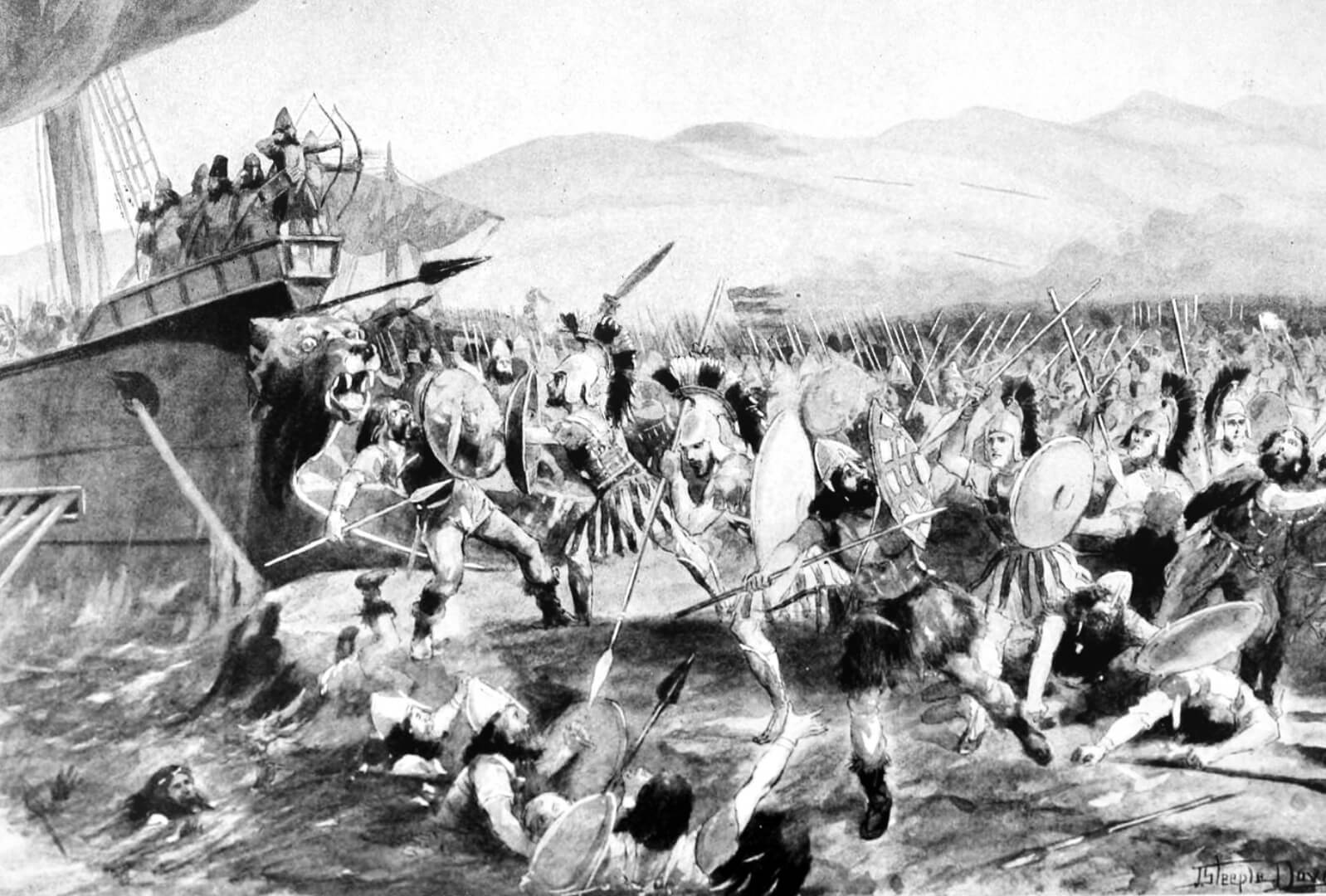
Battles of Marathon, Salamis, and Plataea — The Birth Is Protected
Long before there was a “West,” there was Greece, and Greece gave the world:
• philosophy
• early democracy
• foundations of Western thought
When the Persian Empire invaded Greece, the Greeks were hardly united. However, outnumbered and outmatched, the Greeks chose to fight, and they won. Marathon didn’t end the Persian threat, but it proved something critical: The East was not unstoppable. If Greece had fallen here, the entire trajectory of Greek development could have been altered—or erased entirely.
Even during the second Persian invasion, when we see the crucial Battles of Salamis and Plataea and the razing of Athens, the Greeks persevered. The defeat of the Persians at these battles ended the great threat from the east and set the seed for the rise of Alexander the Great.
Defeats at these three ancient battlefields would have destroyed Athens as we know it today. There would have been no golden age of Greece and no philosophical foundation for the West.
Battle of Tours — The West Holds Its Ground
Fast forward over a thousand years. We now have the early bones of Western Europe, but they’re fragile. The Umayyad Caliphate had swept across North Africa and into Spain. Momentum was on their side. Expansion had been rapid, consistent, and largely unstoppable. Then they pushed from modern Spain into what is now France.
Standing in their way was Charles Martel and a force of disciplined Frankish infantry. These heroic Franks held the line, not permanently, but decisively enough to:
• Prevent deeper penetration into Western Europe
• Preserve the Frankish power base
• Set the stage for the rise of Charlemagne
• Allow a distinctly Western identity to continue forming
Victory at Tours kept the West from being absorbed into an Islamic Caliphate before it could mature into a strong and defensive power.
Battle of Lepanto — The Tide Turns at Sea
By the 16th century, the threat from the East continued in a new form. The Ottoman Empire dominated much of the Mediterranean. Their navy was powerful, experienced, and expanding. If they controlled the sea, they controlled:
• trade
• movement
• strategic positioning across Europe
A coalition known as the Holy League met them at Lepanto. And against expectations—they won. This was the largest naval battle of its time, and its impact was immediate:
• Ottoman naval dominance was checked
• European morale surged
• The idea that the Ottomans were unstoppable took a serious hit
Lepanto didn’t end the Ottoman threat, but it marked a turning point: the expansion of that power began to slow—and eventually reverse.
Battle of Vienna — The Line That Could Not Break
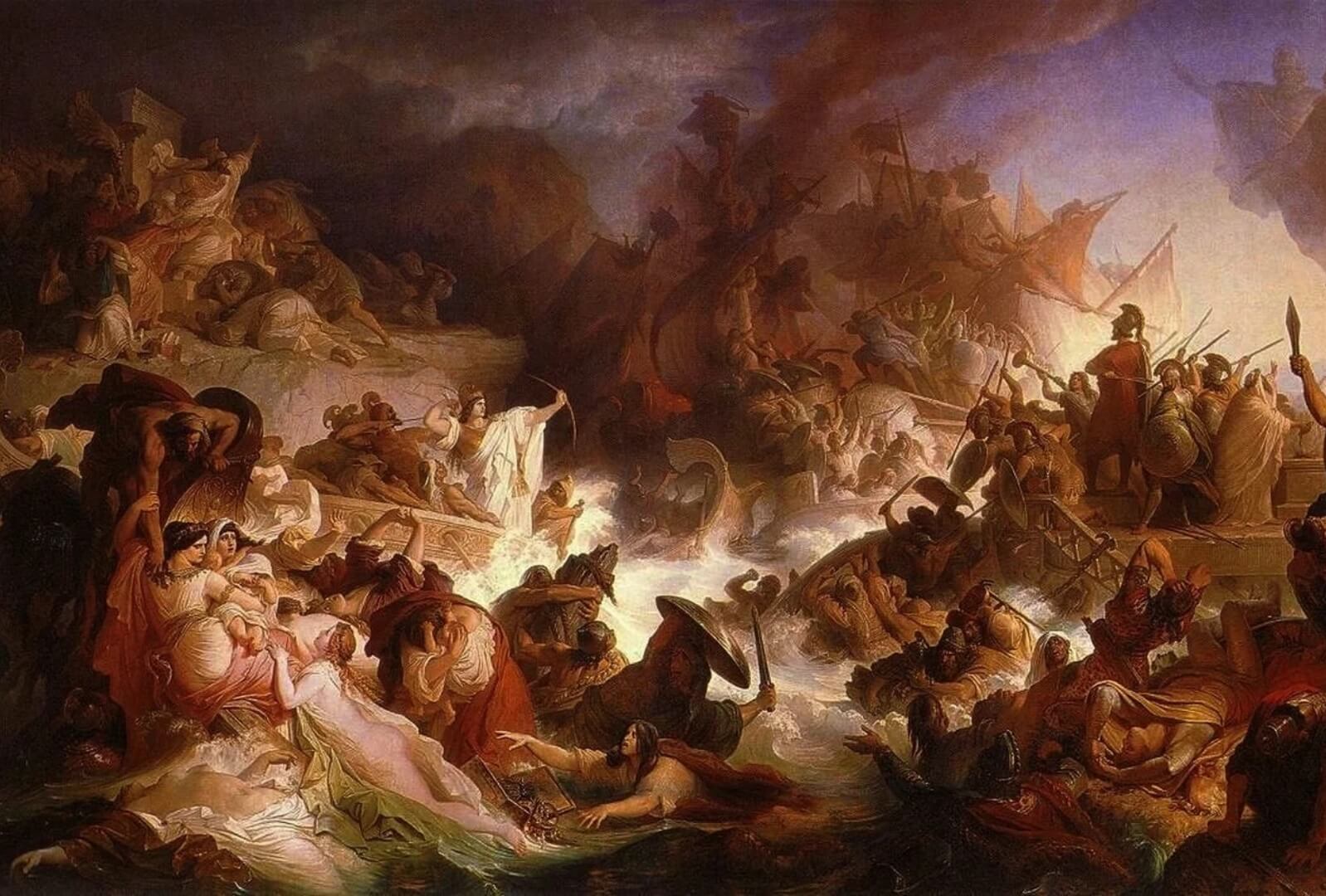
If Tours was the early stand, Vienna was the last great wall. The Ottoman Empire pushed deep into Central Europe and laid siege to Vienna—the gateway to the heart of the continent. If Vienna fell, the road into Europe opened.
Relief came in the form of a coalition army led by John III Sobieski, and what followed was one of the most decisive counterattacks in history.
The siege was broken, the Ottomans were driven back, and from that point forward, the balance shifted permanently.
Final Take
Understanding the history of how Western Civilization was persevered in these crucial battles and beyond helps us see how important preserving these values are today, and while we may not see a great invasion against us in our time like our ancestors did, we are facing an invasion, nonetheless.
In the face of such an ideological onslaught, we must stand tall and true for the values that have established and sowed the dignity and sanctity of human life.
Remember, Train Hard. Train Smart. And hold the line, because it matters more today than we might even realize.