
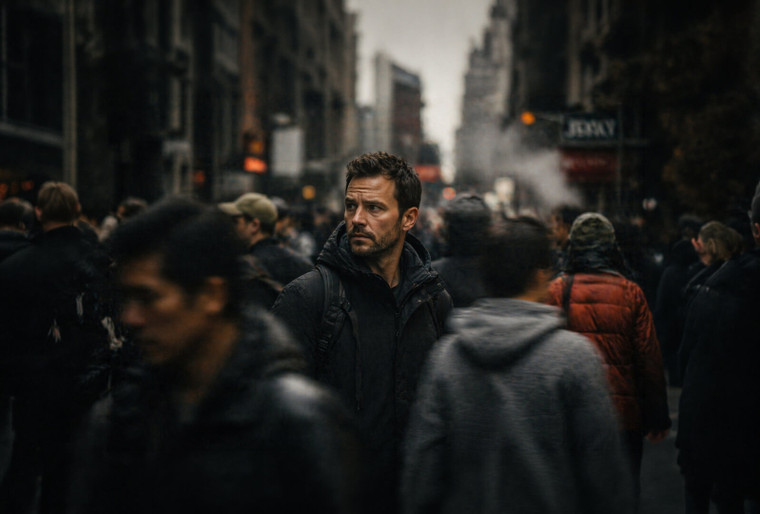
Crash Course in Situational Awareness
Posted by Warrior Poet Society on Apr 24th 2026
Here’s something that might sound crazy coming from a guy who loves guns: if I had to choose between you carrying a firearm every day or employing good situational awareness, I’d choose situational awareness. And y’all know me. I’m a gun guy, but if you can spot the threats ahead of time, you can avoid the fight, and that’s really what I want for all of you.
You’ve heard it before: “They came out of nowhere!” and “It all happened so fast!”
No, they didn’t, and no it didn’t.
What actually happened is this:
You missed everything that came before the attack; because, every predator—whether it’s a terrorist, a murderer, or a low-level criminal—follows a predictable cycle:
1) Target Selection – They pick the easy victim.
2) Information Gathering – They study patterns and weaknesses.
3) Positioning – They move into place.
4) Attack – They strike, which is the moment you finally notice.
If you only see step four, you’ve already lost. Situational awareness allows you to see and prepare from step one. And if you see it early enough, you can create distance and avoid the threat altogether.
The Deer and the Crocodile
Consider the following example:
A deer walks down to a river to drink, and a crocodile is watching. It then begins to stealthily move into position for a successful ambush.
If the deer doesn’t see the threat it’s over, but if it spots the crocodile early it doesn’t need strength, it doesn’t need speed, and it doesn’t need luck. It just walks away. That’s situational awareness.
What we’re walking through today isn’t about paranoia, it’s about preparation, about seeing the threat first so you can avoid a dangerous and potentially life-ending situation.
The Three Biggest Awareness Killers
If you want to stay safe, you need to understand what pulls you out of awareness.
1. Naivety
This is the most dangerous one. It’s the natural overflow from the mindset that: “Bad things don’t happen here,” or “Bad things won’t happen to me.” It’s a general ignorance to the world around you, and predators love this mindset. They can smell it. If your radar isn’t even turned on, trust me, you are the target.
2. Your Phone
Your phone is a literal attention vacuum. It sucks you out of reality and into a screen, and while you’re scrolling, someone else might be watching you. When you’re outside your home—parking lots, grocery stores, gas stations—your phone is your biggest liability.
3. Kids
This one hits parents hard and is a tough reality. Kids constantly demand attention in two ways—they are a double whammy here—one: they require your attention for their needs, and two they are also desirable targets to predators and require your attention even when they are content playing on the playground. Even if you are situationally aware for them, your own situational awareness suffers as a result. You need to recognize this additional vulnerability and compensate for it.
The Color Code of Awareness
To stay sharp without becoming paranoid, you need a system, and the best system for understanding and practicing situational awareness comes from the late, great Jeff Cooper. Look at these as levels of living from least aware to most aware.
Condition White — Unaware
You’re at home. Relaxed. Safe. Sleeping. This is where you recharge and have little to no worries about your security.
Condition Yellow — Aware
This is your default in public. You’re relaxed but alert.
• You notice people
• You catch anomalies
• You’re not stressed
This is where you should live. It should run as a background security protocol in your brain. It should not be exhausting, and you’re not actually putting heavy mental energy into processing and evaluating everything you notice.
Condition Orange — Potential Threat
Because you are operating in the Yellow, you notice something off. You get the luxury of early warning. Your instincts are firing, and now you’re focused on the anomaly. As a result, you are afforded the opportunity of choice. You can prepare to act or leave the situation and relocate you and your family to safer waters.
Condition Red — Fight
The moment has arrived. Now it’s go time. If you have been obviously living in the White and suddenly you find yourself in the Red, you only have one choice, to fight or die, but if you have been operating in the Yellow, elevated to Orange upon noticing suspicious activity, you can avoid the Red altogether or act for the preservation of others around who are living blissfully in the White. In short, you get options to prepare for this moment.
The Sweet Spot
You don’t live in White outside your home, but you don’t live constantly in Orange either. That will burn you out. Live in the yellow—calm, collected, aware.
Profiling: The Skill Nobody Wants to Talk About
Living in the Yellow, you’re going to see a lot of information around you. 80% of it is irrelevant, and if you try to process everything, you might miss the actual threat.
So, you must filter, but filter quickly.
That means:
• Dismissing non-threats immediately
• Focusing only on meaningful indicators
• Making fast, imperfect, but useful judgments
• Leveraging statistics and data
Threat Indicators: What to Watch For
Let’s walk through 5 categories of threat indicators to help you train your condition Yellow for better effectiveness.
1. Communicated Threats
• Verbal threats (“I’m going to hurt you”)
• Veiled signals (brandishing, gestures, posturing)
Believe people when they tell you they plan to hurt you, either through words or with gestures.
2. Scanning Behavior
Not all scanning behavior indicates a threat, sometimes it can help identify a potential ally should things actually go south in the AO.
Good guys scan with confidence and awareness.
• Head up
• Eyes move with head
• Will make eye contact
These are the guys you can usually count on.
Bad guys scan differently.
• Head slightly down
• Eyes moving independently
• Avoid eye contact when caught
• [CAVEAT] This is also what guys may do if they are checking out a girl, so observe keenly.
This leads me to an important note. Any of these indicators noticed in isolation may result in a false positive. If you notice odd behavior in any of these categories, try to notice other indicators to see if any stack. If so, you will have greater confidence that you have actually located a potential threat.
3. Wardrobe Anomalies
• Heavy clothing in warm weather
• Concealment-focused outfits
• Sunglasses indoors
• Hood up, face hidden
• Carrying a bag that might be out of place socially
Ask the question: “Why?”
4. Physiological Signals
• Profuse sweating
• Sudden paleness or flushing
• Rapid breathing
These are signs of someone may be gearing up for violence.
5. Physical Expression or Activity
• Thousand Yard Stare
• Fidgeting or overtly busy
• Unable to stand still or jittery
It’s common how often those psyching themselves up for the violence will try to either disconnect themselves from the humanity around them (Thousand Yard Stare) or begin to move and fidget without cause (lots of pivoting back and forth, shifting weight, checking their phone over and over again, etc.).
6. Pre-Attack Behavior
• Clenched fists or opening and closing their hands
• Bladed stance
• Weight shifting
• Chin tucked
• Subtle lowering of posture
These are universal fight cues.
The Gift of Fear
This might be the most important part, especially for any ladies reading. It comes from a book called The Gift of Fear by Gavin De Becker.
De Becker argues that our subconscious sees things your conscious mind misses, that it is better at picking up pre attack indicators than our conscious mind, which is often caught up in our own tasks and responsibilities.
That uneasy feeling? That hesitation? That quiet voice saying, “Something’s off…”? That’s a gift from your instincts attempting to preserve you. Especially for women, this instinct is powerful and too often ignored. We are so quick to rationalize our way into danger instead of instinctually fleeing it.
So many who are victimized usually express that something was off or something was wrong that they either felt or noticed ahead of time and that they wish they would have listened to that feeling.
Don’t ignore what your instincts are telling you. Trust them. At best, they’ve just saved your life, at worse, maybe you’re embarrassed. That’s an easy trade any day. It’s better to be wrong and safe than right and dead.
Final Thought
As I mentioned at the start of this blog, situational awareness isn’t paranoia. It’s preparation. It’s calm, controlled attention to your surroundings, and it’s the discipline to see what others miss and act before it’s too late. Because the man who sees the threat first is usually the man who gets to go home.
Remember, Train Hard. Train Smart. And deploy keen and practiced situational awareness.